People sometimes talk about the grid method as if it were a modern trick, a way for beginners to skip the hard work. The truth is almost the opposite. The grid is one of the oldest tools in the entire history of art, and some of the most revered names in painting relied on it without a hint of embarrassment.
Following its story from ancient Egypt to the present day is a good way to understand what the grid is actually for, and why it has survived every change in taste and technology for thousands of years. If you would rather just learn the technique, our guide on what the grid method is covers the basics.
The Egyptian canon of proportion
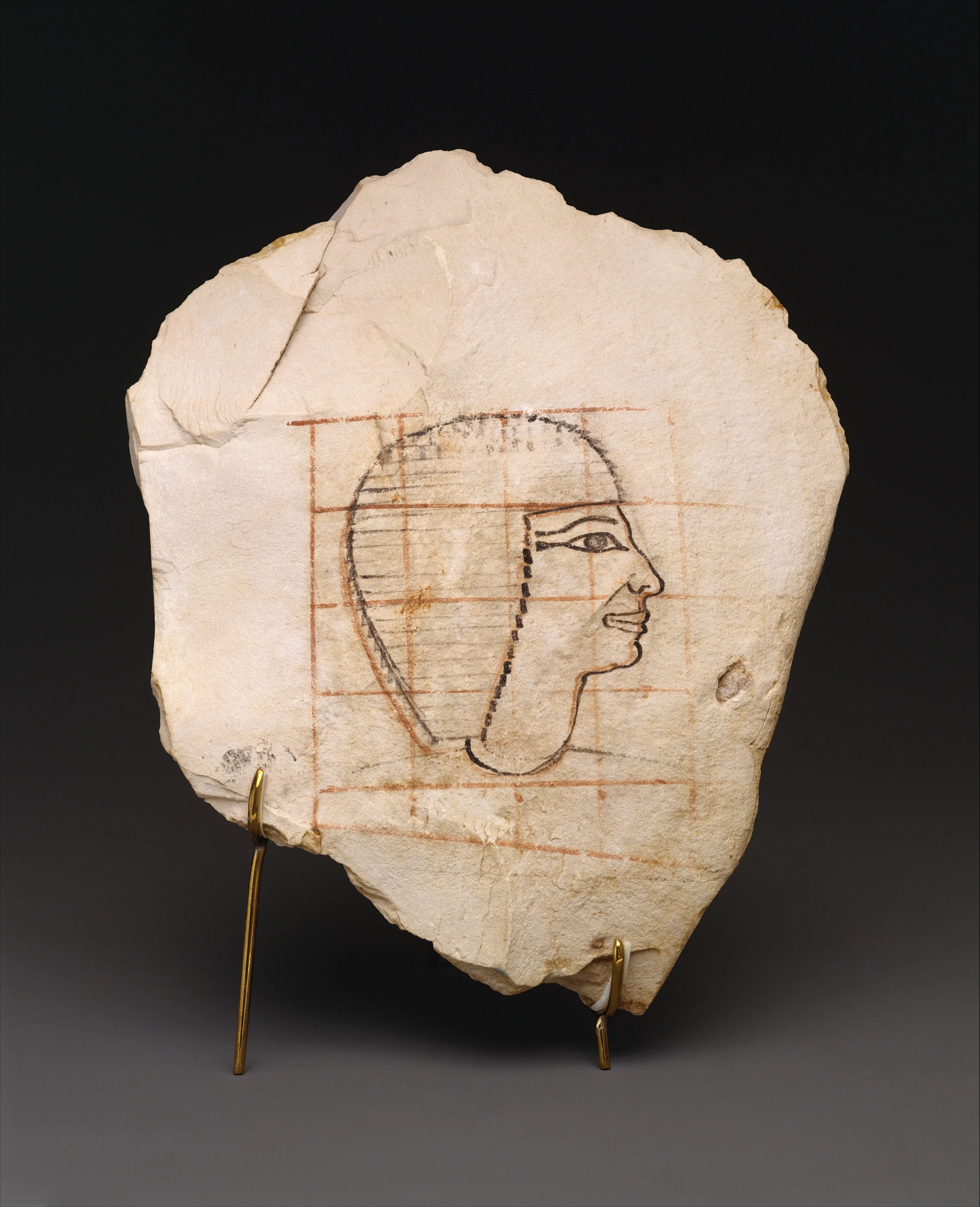
The earliest surviving grids come from ancient Egypt. From around three thousand years before the common era, Egyptian artists worked to a strict canon of proportion, and by the Middle Kingdom they were laying out standing figures on a grid of eighteen squares measured from the hairline to the soles of the feet.
Within that grid, every landmark had an assigned place. The knees sat on a particular line, the shoulders spanned a set number of squares, and the whole figure could be reproduced at any scale simply by ruling out more squares. It let a workshop of different hands produce figures that all looked consistent, whether on a small sketch or an enormous tomb wall. Unfinished walls at sites such as Amarna and Deir el-Medina still carry the red grid lines the artists snapped onto the plaster before they began.
From its very beginning the grid solved two problems at once: it kept proportions consistent, and it let an image be scaled up or down at will. Those are exactly the two jobs artists still use it for today.
Alberti's veil and the Renaissance
The grid took on a new role in Renaissance Italy, where the great obsession was linear perspective. In 1435 the scholar and architect Leon Battista Alberti described a device in his treatise On Painting that he called a veil. It was a fine net of threads stretched on a frame, divided into squares by thicker threads, and set up between the artist and the subject.
Looking through the veil from a fixed point, the artist could see exactly which square each part of the scene fell into, then copy it onto paper ruled with the same grid. For the first time the grid was being used not just to scale a flat design but to capture the three dimensional world accurately, with all its foreshortening and perspective, one square at a time.
Durer and his drawing machines
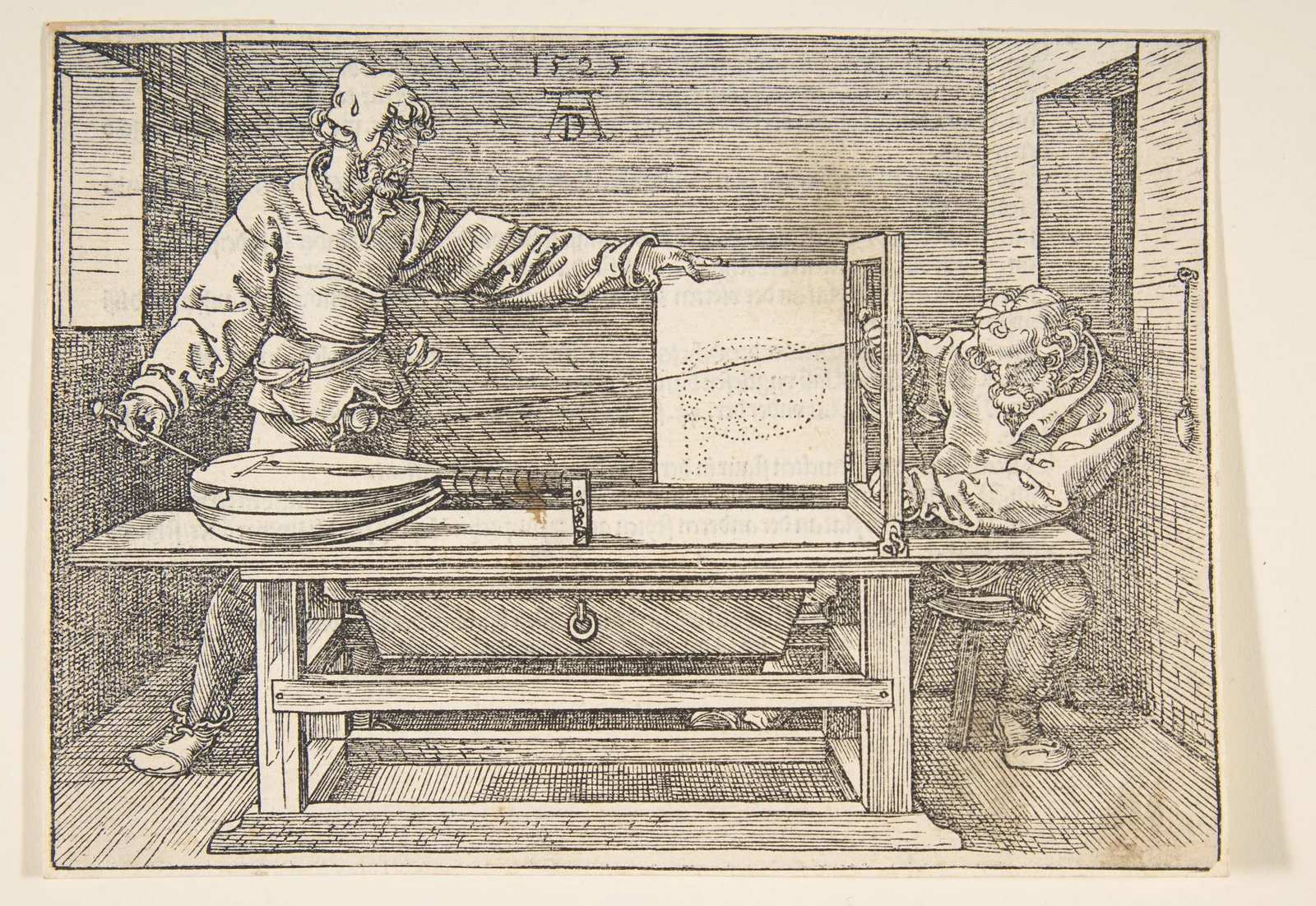
The German master Albrecht Durer took Alberti's idea and made it famous. In 1525 he published a treatise on measurement, the first mathematical book printed in German, which included a series of now iconic woodcuts showing artists using drawing frames and gridded screens.
One shows a draughtsman drawing a lute through a system of threads. Another shows an artist studying a reclining figure through a gridded frame, transferring what he sees square by square onto matching squares on his paper. These images have been reproduced in countless art books ever since, and they cemented the grid as a respectable part of the serious artist's toolkit rather than a shameful secret.
Squaring up the great commissions
While the veil captured scenes from life, another version of the grid was quietly doing the heavy lifting behind the era's grandest works. It was called squaring up, and it was how a small preparatory sketch became an enormous fresco or altarpiece.
An artist would draw a grid over a modest study, then rule a matching grid, with many more and much larger squares, onto a full sized drawing known as a cartoon. Copying square by square, the design was enlarged without losing its proportions. The finished cartoon was then transferred to the wall, often by pricking its outlines with tiny holes and dusting charcoal through them, a technique called pouncing, or by tracing the lines with a stylus into the wet plaster.
This is worth sitting with for a moment. The ceilings and walls that draw millions of visitors today were routinely scaled up using the very same square counting method a beginner uses to copy a photograph. The grid was standard professional practice at the highest level of art, and the steps have barely changed, as our guide on how to use the grid method shows.
The optical cousins
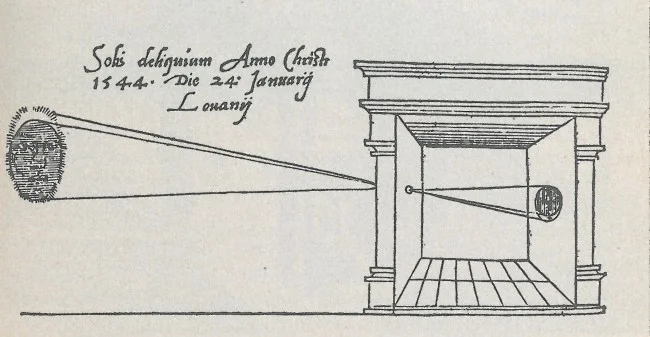
The grid did not evolve in isolation. Alongside it, artists developed optical aids that chased the same goal of accuracy by different means. The camera obscura projected a live image of a scene onto a surface where it could be traced, and the later camera lucida used a prism to make the subject appear superimposed on the paper.
These devices are cousins of the grid rather than the same thing, and they have their own long and sometimes controversial history. What they share is a simple, honest ambition: to help the hand set down what the eye sees, faithfully. The grid endured where some optical tricks came and went, because it needs no lenses, no darkened room, and no expense. A ruler and a pencil are enough.
Academies and the nineteenth century
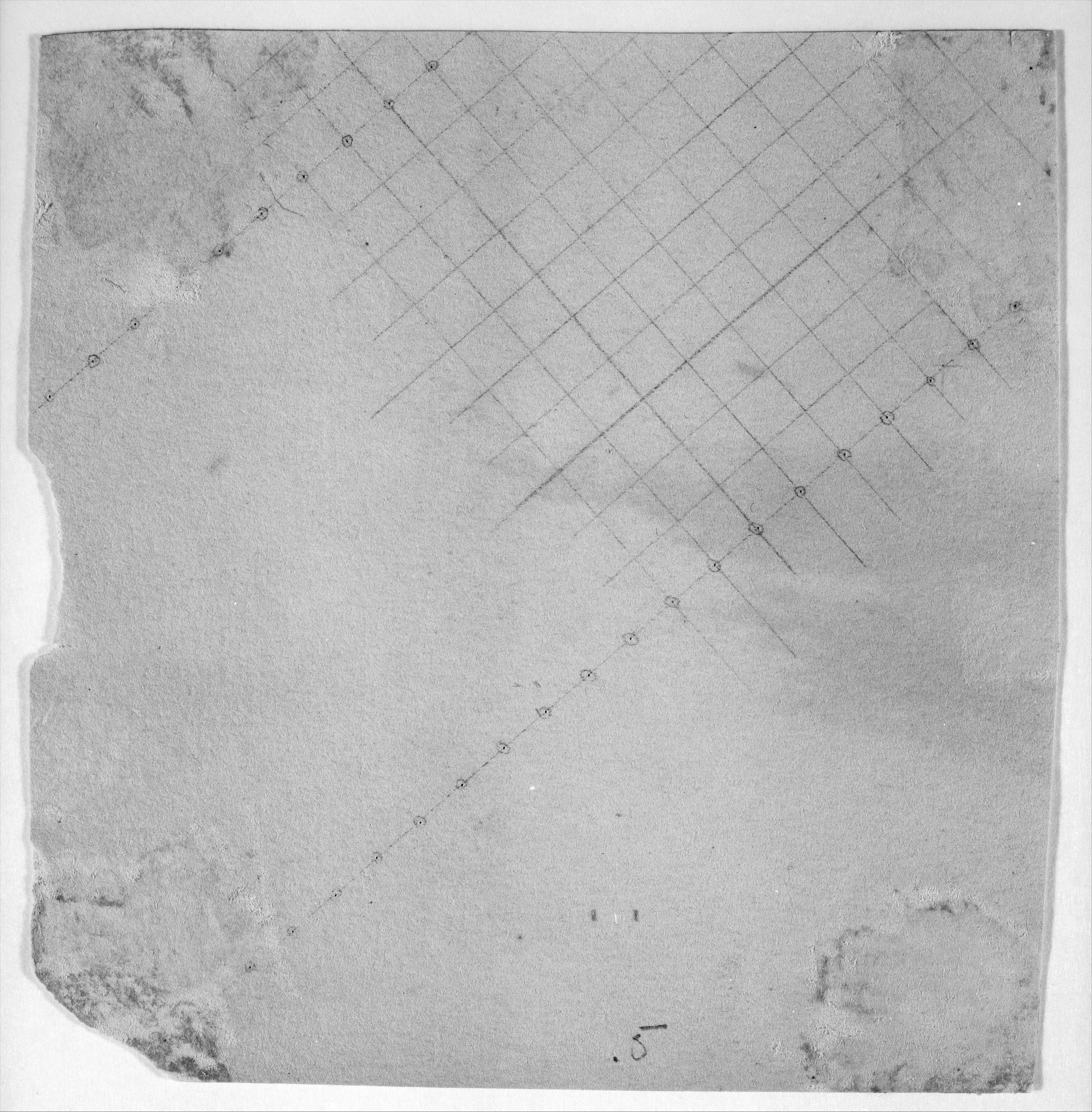
By the eighteenth and nineteenth centuries, squaring up was simply part of an academic artist's training. Preparatory studies covered in grid lines survive from countless painters of the period, evidence of a working method passed quietly from master to student. The gridded sheet from a young James McNeill Whistler's sketchbook above is a small, ordinary example of a habit shared across the profession.
Muralists and decorators in particular could not have functioned without it. Transferring a designed composition onto a vast public wall demanded a reliable way to enlarge, and the grid remained the most dependable one available.
The grid in the modern day
The twentieth century did not retire the grid, it gave it new jobs. Sign painters and billboard artists squared up their designs to cover enormous surfaces. Comic and animation studios used grids and related transfer methods to keep characters consistent. Photorealist painters made the grid central to their process, and mural artists still chalk grids onto walls before the first stroke of paint.
What has changed is the labour. For most of its history, setting up a grid meant careful measuring, division, and ruling, with plenty of room for error. Software now handles the arithmetic and the drawing, so the artist gets a perfectly even, correctly scaled grid in seconds and can spend their energy where it belongs, on the drawing itself. The tool is ancient; only the setup has caught up with the times.
Final thoughts
The next time someone suggests the grid is a beginner's crutch, it is worth remembering the company it keeps. The same method squared out figures on the tombs of the pharaohs, captured perspective for the Renaissance, and scaled up the frescoes that still fill guidebooks today. A tool with that pedigree has earned its place.
If you want to see how individual artists put it to work, our companion piece on famous artists who used the grid method brings the story down to the level of specific paintings and people.
Carry on a three thousand year old tradition
Set up a perfectly even, correctly scaled grid for any reference in seconds, with none of the measuring the old masters had to do by hand.
Try the tool for $2