
The question of whether using a grid in art is "cheating" has been debated for years, especially in realism and portrait drawing communities.
Some artists believe mechanical methods like gridding, tracing, or projection bypass important freehand drawing skills. Others see the grid method as simply another professional tool used to improve accuracy and efficiency.
In this article, we'll look at why people argue about the grid method, what it actually does, where the criticism comes from, and whether using a grid really makes artwork any less valuable.
Why do people think the grid method is cheating?
The grid method has been controversial in the art world for a long time, as our guide on the history of the grid method shows.
Some artists believe using a grid is "cheating" because it helps place proportions and features more accurately without relying entirely on freehand observation and measurement. Instead, the artist uses a system to guide the drawing process.
To some people, this feels less impressive than drawing completely freehand.
This opinion is especially common in realism and portrait art, where artists often spend years training their ability to judge angles, spacing, anatomy, and proportions by eye.
For artists who have invested a huge amount of time developing those skills, mechanical methods can sometimes feel like bypassing an important part of the learning process.
And it is worth mentioning that the ability to draw freehand, using only observation to inform the placement of details, is a very powerful skill to learn. However, just because there is value in possessing freehand skills does not mean there is no value in gridding.
For many artists, the debate ultimately becomes a discussion of freehand drawing vs grid drawing.
What the grid method actually does
The grid method does not magically create good artwork for you.
It does not teach shading, composition, colour theory, lighting, edges, brushwork, anatomy, design, or creativity. What it mainly helps with is placement, proportion, scaling, and transferring a reference image accurately.
The grid method solves one specific problem: accurately transferring shapes and proportions from a reference image. Everything else; shading, composition, colour, lighting, brushwork, anatomy, design, creativity, still depends entirely on the artist.
A grid can help you place an eye in the correct position, but it cannot make you understand why the eye looks realistic.
That distinction is important.
And for many artists, the accuracy of the final artwork is far more important than the personal pride that can come from drawing completely freehand.
Why some artists dislike mechanical methods such as gridding
Many artists believe freehand drawing builds stronger observation skills.
When you draw without guides, you are forced to:
- compare angles manually
- judge proportions by eye
- understand structure more deeply
- notice mistakes without external assistance
That process can train the eye very effectively over time.
Because of this, some artists feel that relying too heavily on grids, tracing, or projection can slow the development of those freehand skills.
And honestly, there is some truth to that.
If someone only ever copies references using mechanical tools, they may struggle later when trying to:
- draw from imagination
- sketch live subjects
- invent poses
- quickly construct forms without references
- make creative decisions to embellish or enhance the final painting beyond what is present in the reference image
So while "cheating" is probably the wrong word, there is a real discussion to be had about skill development.
More importantly, it depends on the artist's actual goals and expectations.
Some questions to help you decide if the grid method is right for you might include:
- How dedicated are you to art?
- Is this going to be your main profession, or something you do more casually?
- How important is it that you preserve accurate proportions and placement?
- Is there an expectation that your artwork should be highly accurate, such as commission work?
- How often do you actually make art?
The difference between learning and producing
A lot of the debate around the grid method comes from people having completely different goals.
Focused on learning
- training observation skills
- mastering anatomy
- drawing from imagination
- improving freehand accuracy
Focused on producing
- creating finished artwork
- making commissions
- producing realistic portraits
- enlarging references accurately
- reducing frustration
- enjoying the creative process
Those are completely different priorities.
If your goal is to become extremely skilled at freehand drawing, then spending time drawing without guides probably makes sense.
But if your goal is to create the best artwork possible, using tools to improve accuracy is not automatically a bad thing.
Professional artists use tools constantly.
Perspective rulers, proportional dividers, projectors, photo references, 3D models, masking tape, stabilizers, colour pickers, and digital layers are all tools that simplify certain parts of the artistic process.
The grid method is just another tool in that category.
Is tracing cheating?
Tracing is usually considered more controversial than the grid method because the artist is directly copying outlines rather than reconstructing them square by square.
However, even tracing is not automatically meaningless.
Many professional artists trace for murals, tattoos, animation cleanup, transferring sketches, layout work, underpaintings, and commercial deadlines.
The real question is usually not:
"Did you use a tool?"
The real question is:
"What were you trying to achieve?"
If someone traces a portrait and claims they drew it entirely freehand, most artists would probably see that as dishonest.
But using tracing as part of a workflow is extremely common in professional art.
Do professional artists use grids?
Yes. Absolutely.
Many professional artists use grids, especially for realism, portraiture, murals, large canvas work, commissions, and public artworks. In fact, the famous artists who used the grid method range from Leonardo da Vinci to Vincent van Gogh.
Historically, artists have always looked for ways to improve accuracy and efficiency.
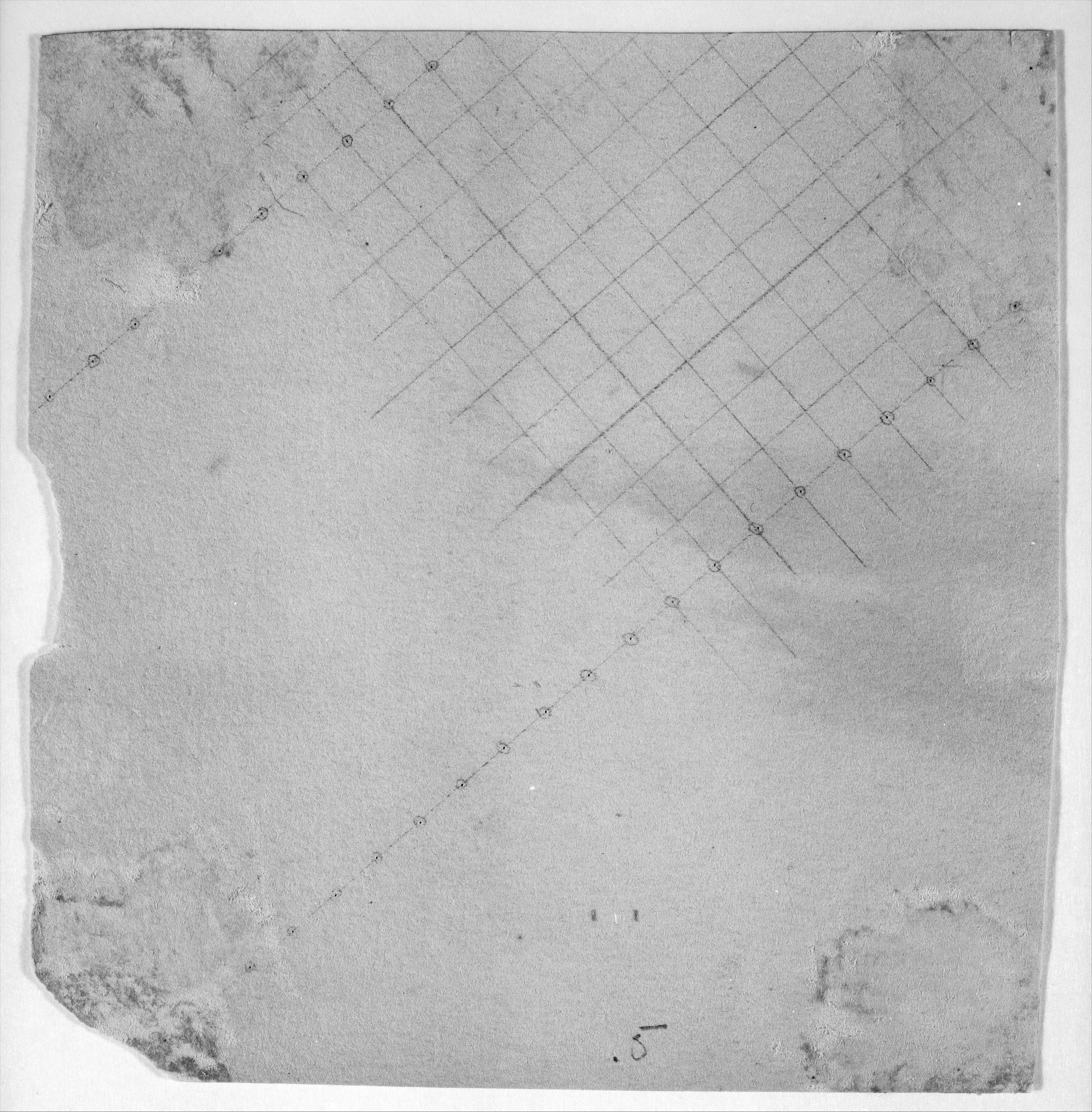
Long before photography existed, artists were already using a variety of techniques to transfer compositions accurately. During the Renaissance, many artists used squaring (the traditional name for the grid method) to enlarge drawings onto larger canvases and walls. Other optical tools, such as the camera obscura and later the camera lucida, allowed artists to project or visually overlay a scene so they could establish accurate proportions before beginning a painting.
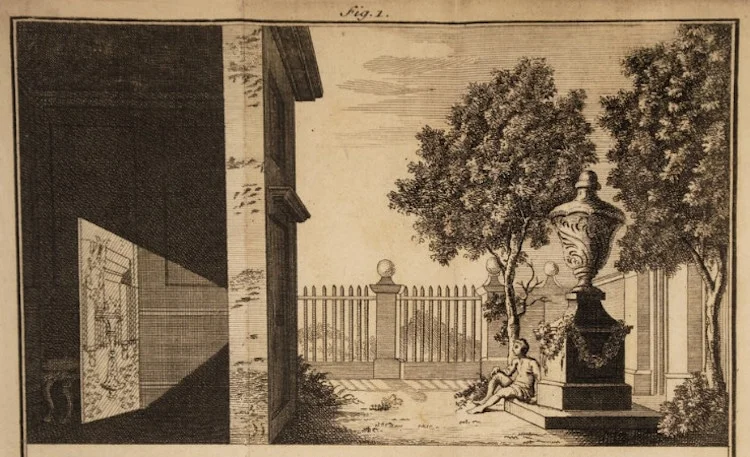
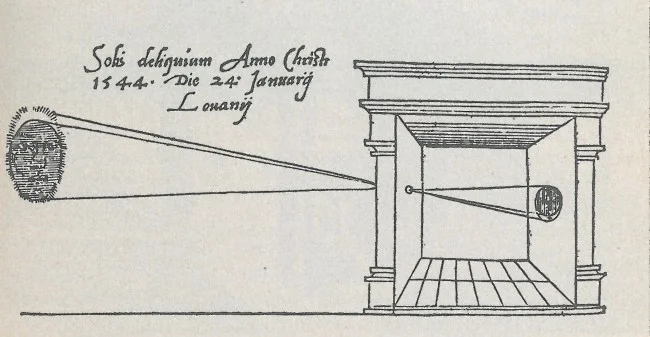
These tools did not create the artwork for the artist. They simply solved one practical problem: transferring shapes and proportions accurately. Everything that gives a painting its artistic value, things like composition, colour, lighting, brushwork, edges, texture, and expression, still depended entirely on the artist's skill.
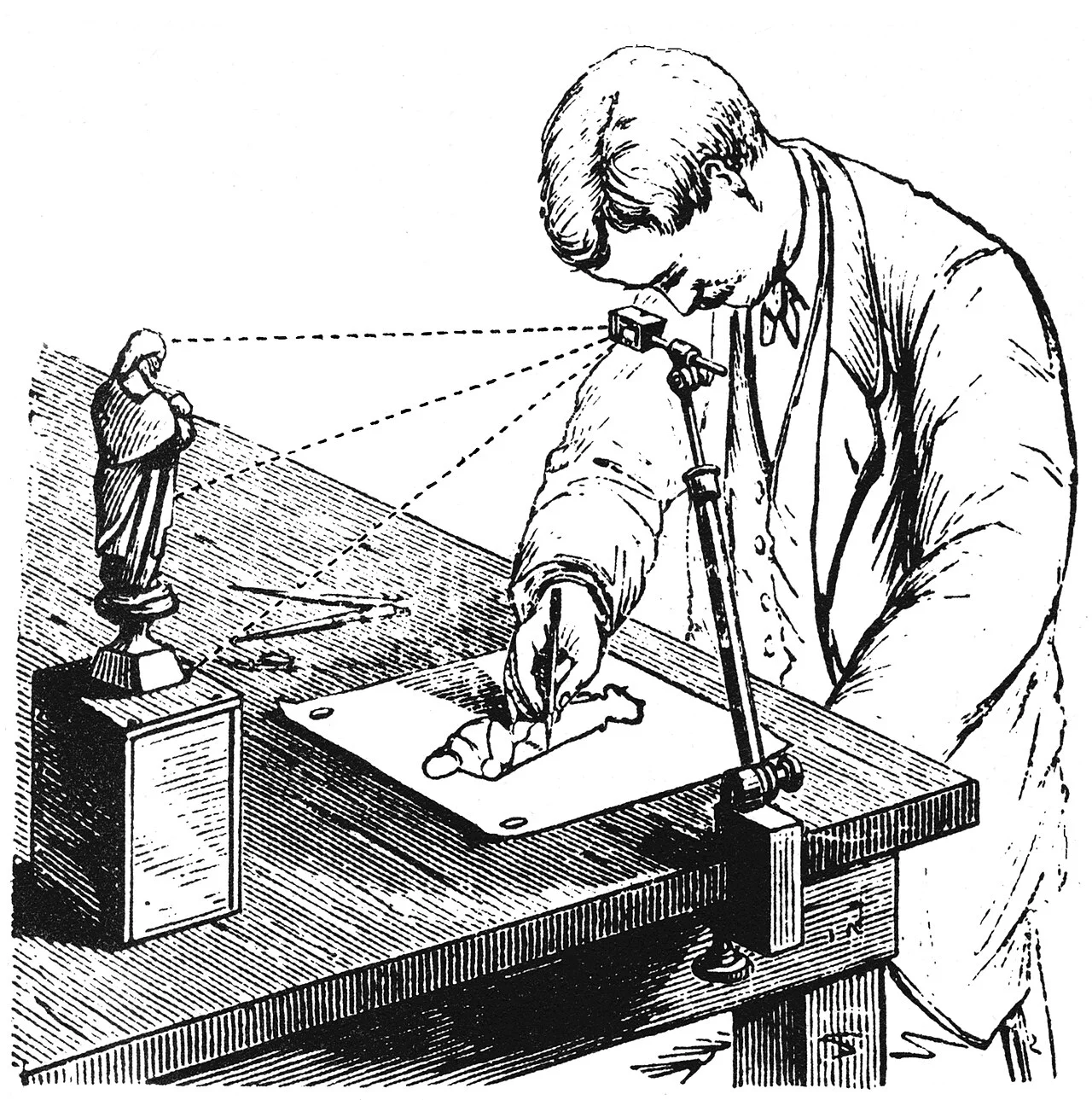
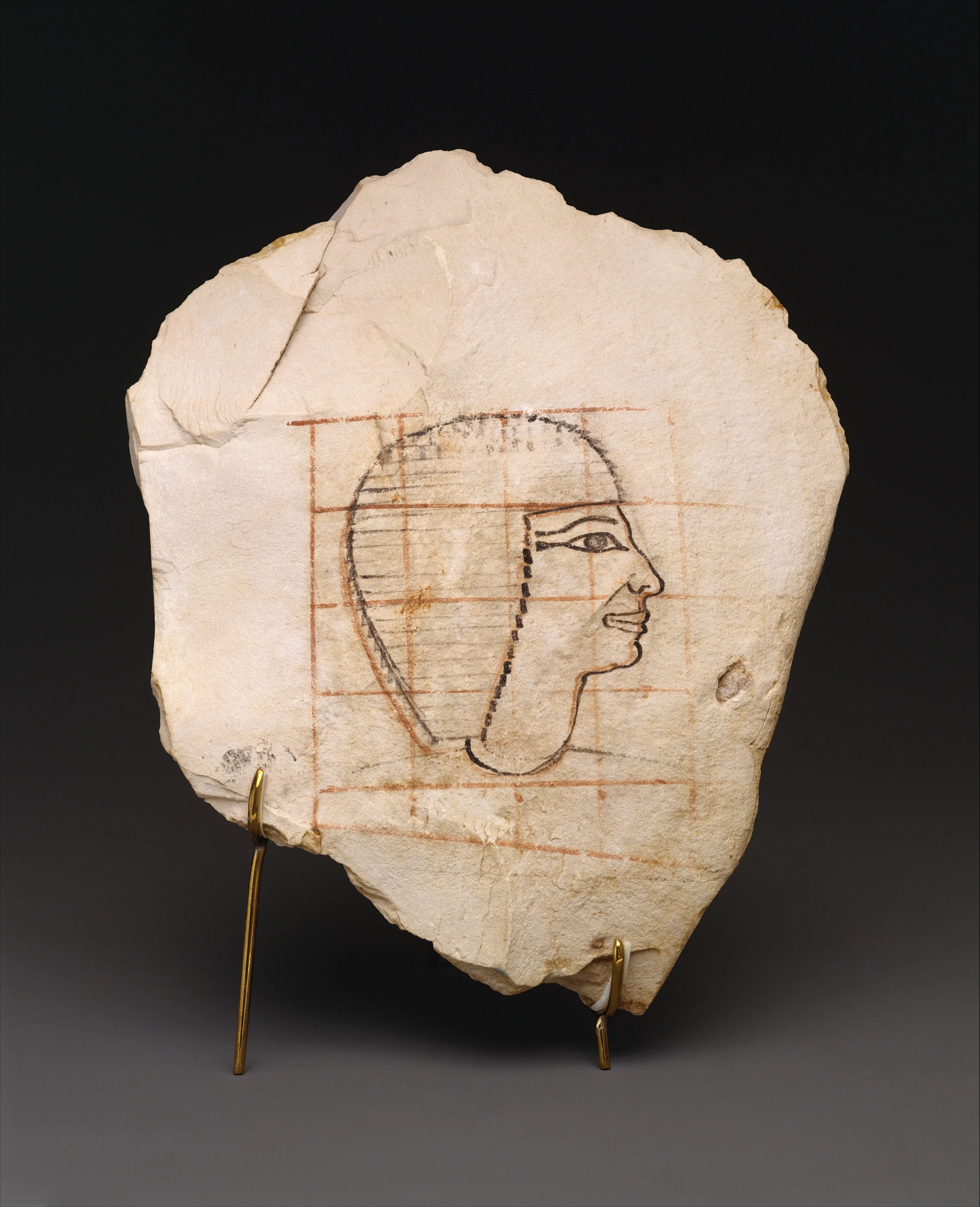
In many cases, an artist would first create a detailed drawing using observation or an optical aid, then use squaring to enlarge that drawing onto the final canvas. The grid wasn't replacing artistic ability; it was simply making the transfer process more accurate and more efficient.
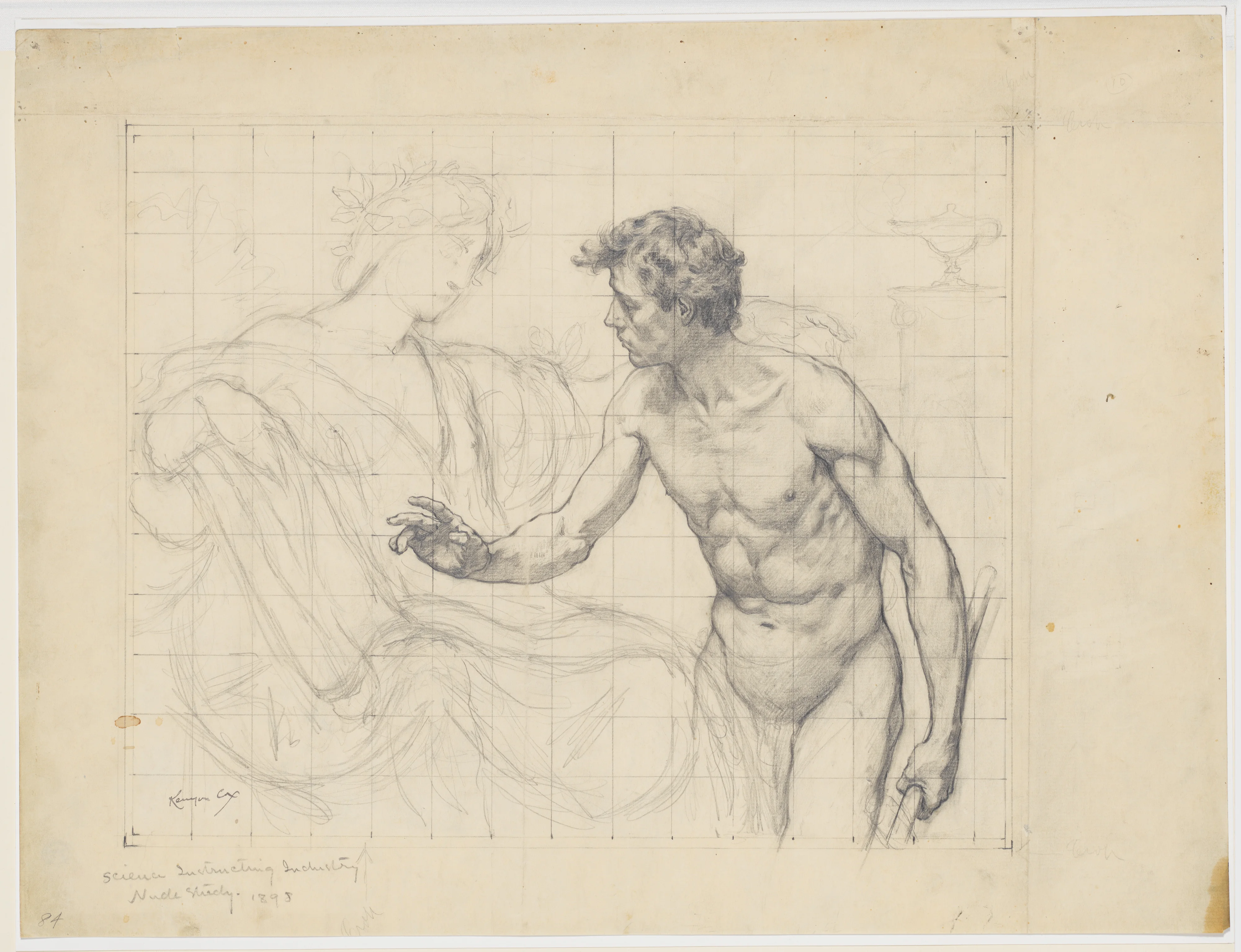
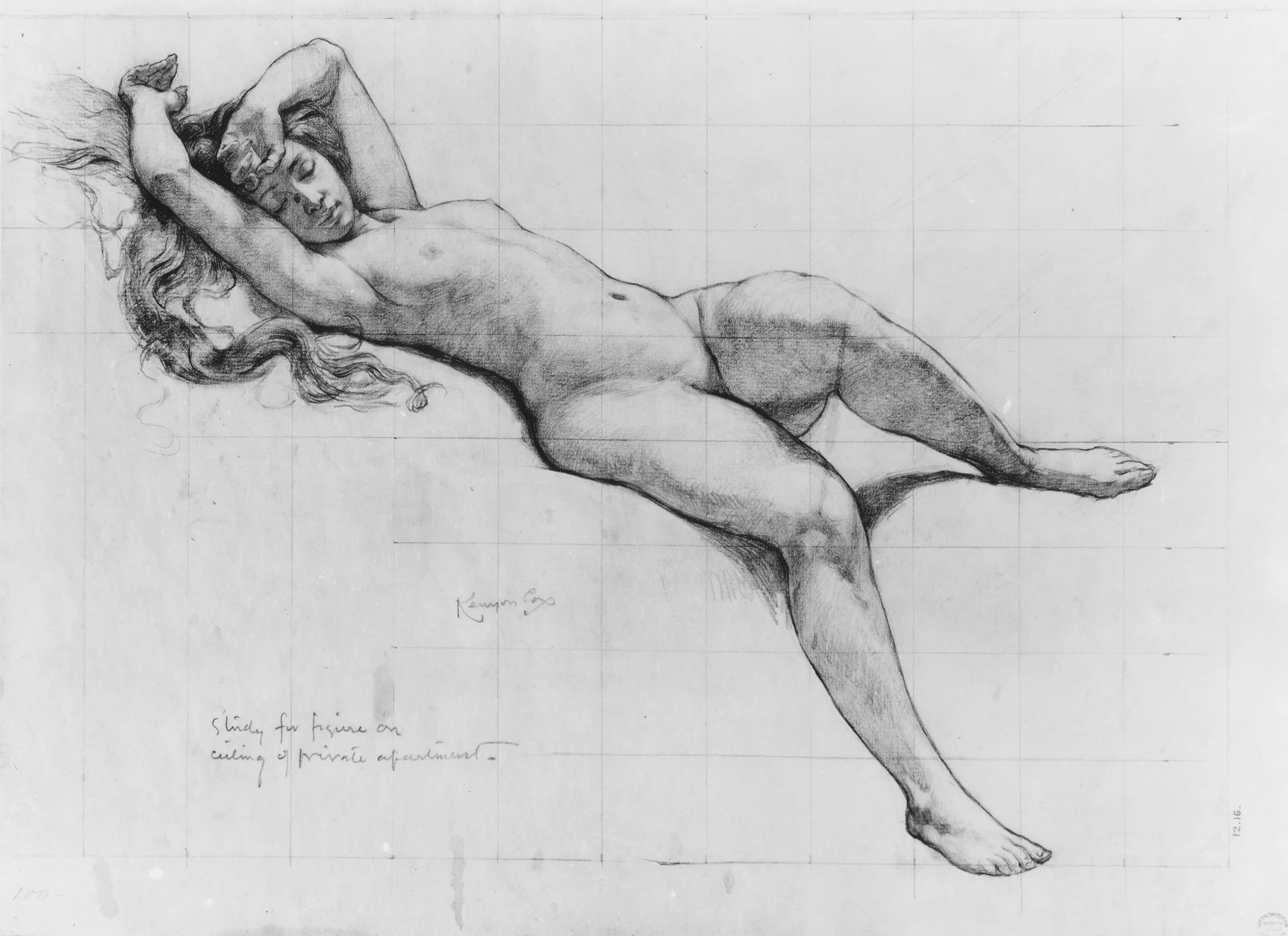
Today's digital grids, projectors, and tablets are simply modern versions of that same centuries-old tradition. Artists have always adopted whatever tools were available to help them achieve the best possible result.
The idea that "real artists never use guides" is mostly a modern internet argument.
In reality, professional artists are usually far more focused on results, workflow, deadlines, consistency, and client satisfaction than proving they can do everything freehand.
When the grid method can slow your growth
The grid method can become limiting if it becomes your only way of drawing.
If you never practice:
- freehand observation
- structure
- anatomy
- perspective
- construction drawing
This becomes especially noticeable when trying to draw:
- original characters
- imaginative scenes
- dynamic poses
- live subjects
- quick sketches without references
The grid method is best viewed as a tool, not a replacement for understanding form and structure.
When the grid method makes perfect sense
The grid method makes a lot of sense when accuracy is important, proportions need to match the reference closely, you are enlarging an image onto a larger canvas, you are creating realism artwork, you are doing commission work, you want to reduce frustration as a beginner, the final artwork matters more than practicing freehand skills, or you simply enjoy the process more with guides.
There is nothing inherently less artistic about using tools to help achieve a result.
Is art made using the grid method any less valuable?
Hopefully by this point, you're starting to sense the answer to that question.
While the process behind creating artwork can sometimes add to the story or meaning behind it, it is often nearly impossible to tell whether a painting or drawing was created using the grid method or not.
And if you genuinely like the final artwork, why should the method used to create it matter so much?
This debate appears in almost every creative field in one form or another, and it is often argued most strongly by people focusing on the tool itself rather than the broader creative process.
In music, autotune is constantly described as a form of cheating. But the reality, as almost anyone who has worked professionally in music production will tell you, is that it is extremely rare for professionally produced vocals to be released without some level of pitch correction applied. This is true even for some of the greatest singers in the world.
And it is not because those singers cannot sing.
It is because they are creating something that will be listened to repeatedly, often for years, in exactly the form it was released.
Photography has the same argument around Photoshop.
Some people claim that editing photos is cheating, yet almost every image you see in advertising, magazines, posters, commercial photography, and professional media has been edited in some way.
Not because the photographer lacks skill.
Not because the subject was not beautiful or interesting.
But because the final image is intended to be viewed again and again.
If you are creating something that people will return to repeatedly, whether that is music, photography, or visual art, most professionals want the final result to be the best it can possibly be.
So… is the grid method cheating?
No, the grid method is not cheating.
It is simply a mechanical drawing method that helps artists transfer proportions more accurately.
However, whether it is the best method depends entirely on your goals.
If your goal is improving freehand observation and drawing from imagination, relying too heavily on grids may slow that growth.
If your goal is creating accurate, polished artwork from a reference image, the grid method is one of the most effective tools available.
Neither goal is more legitimate than the other.
The important thing is understanding what you are trying to improve, and choosing the tools that help you get there.
Try the grid method yourself
Grid Your Art makes it easy to apply a grid to any reference image, convert to grayscale, and print a perfectly scaled guide, all in seconds.
Open the tool for free